Blog

inspiration, life, Personal, self care

5 Lessons My Sons Have Taught Me.

IMG_2966As a parent, you spend a lot of time teaching your kids stuff – how to do basic tasks, why manners are important, how to share when you don’t want to, and why it’s a really bad idea to stab that slug that crept into the dishwasher.


But we learn from our children too, most often without being aware of it. With the arrival of 2019 I found myself reflecting on some lessons I have learned from my sons.


Taking action on a fear lessens it

This is one of those lessons you learn because you’re teaching it – a case of practice what you preach. I will often get paralysed by fear of bills or the fear of inadequacy. When I was terrified about sending out queries my sons reminded me that I always tell them to face their fears.


They were right.


I’ve seen them face down fear of public speaking, of telling the teacher they haven’t done their homework, of zooming down a big hill, of embarrassment, and of catching public transport by themselves. I’ve seen them learn that the fear is soon over and that once the action is taken and a decision is made the fear subsides. The movie ‘We Bought A Zoo’ has one of my favourite quotes about courage:


You know, sometimes all you need is 20 seconds of insane courage, just literally 20 seconds of embarrassing bravery, and I promise you something great will come of it.


This last year I wanted to run away from my writing a great deal but I remembered the look in my sons’ faces when they conquered a fear and I did it anyway.


Being useful provides a good sense of self efficacy


Recently my parents came around to help us make my garden into something beautiful. The boys dug holes, planted the roses they’d chosen, carried clippings, mowed lawns, weeded. The next weekend they cleaned off the deck and helped clear the garage. They didn’t necessarily start out keen about these things but at the end both of them felt proud of themselves, they felt energised and capable. They had been useful, helpful, and active. All these things help build a view of ourselves as effective and help build our self esteem.

img_1705.jpg

Patience is more than a virtue, it is a kindness


Many, many times, I have wanted to rush my kids through some less than scintillating recount of their latest computer game escapades before my brain explodes. I’ve wanted to rush the bedtime story to get to bed myself or to get on with my own writing or reading. But every time that I have stopped and relaxed into it, been patient with their enthusiasm, their chatter, their slow stories, I’ve seen the pleasure in their faces. Being patient with them and their follies, their passions, their mistakes, their stress about their homework, is a kindness. It shows them that they are valued. They know I don’t love computer games – what they take from this is that I love them. I have a tendency to be impatient in some circumstances but when I remind myself to practice patience I am always reminded that what I am practicing is kindness.


And what you reap is joy.


One of my best memories is going with my kids to North Head – there are a bunch of old military tunnels and slopes to ride down on cardboard, and seaside caverns to explore. Often on a day trip we go we do the thing and I’m “Okay we gotta go, we’ve done the thing, let’s go.” This day I didn’t. I was patient with them. I listened to the long stories and thoughts and I followed them wherever they wanted to go. We explored that whole darn place. I had so much fun seeing their excitement and pleasure in discovering new things.


You also, when you’re patient with the world, see magic.

‘Quick we’re going to be late! Quick! Why have you Stopped!’

‘Look Mum!’

‘What? What are we doing?’

‘Just look!’

There, on his finger, picked up from the fence, was a perfect dew drop, shimmering in the sunlight.

Magic. 

img_2156
I took this photo towards the end of last year. I was so entranced by the beauty of these dew drops. I’m glad I stopped to look.

Sometimes you can’t fix things


Sometimes things suck. Sometimes you lose everything you’ve worked hard to collect on Roblox and you feel devastated. Sometimes you have to go between two different houses and two different parents and you have to deal with all your conflicted feelings about it. Sometimes you have to go to family things and not the cool thing with your friends. Sometimes you feel scared and sad and lonely and you can’t just wish the feelings away.


Being a parent all you want to do is make sure your kids are happy. When you’re able to rebuild the destroyed Ninjago dragon lego the dog knocked over (without instructions!!) you feel like a superhero.


But lots of times you can’t do that.


My oldest son was bullied a lot in primary school. I could help some, but I couldn’t make it go away. I’ve learned so much about acceptance and about positivity and about holding my kids while they cry for half an hour – not telling them it’s all okay because they know it isn’t, but just letting them know that I am there and they aren’t alone. I’ve learned about respecting people’s distress even if you don’t think Minecraft is anything to cry about.


Encouragement and Support goes both ways.


This last year was incredibly difficult for me (hence the lack of blogging). My sons have been the most extraordinary cheerleaders and supporters. The care and love they give me has lifted me from spiralling sadness so very many times. I didn’t exactly wander around weeping in front of them, but I was open with them about my battle through depression, I was open with them about my initial hurt over my writing being rejected, I was open with them about my insecurities about my writing, and my struggle to feel ‘enough’. I don’t want to burden them but I think sometimes knowing someone is sad but not why can be very upsetting for kids. My sons were able to cheer me, to remind me to be strong, to let me know they loved me regardless of what I saw as failings, and to show me through small but precious ways that they respect and value me for who I am and what I do.


I have always strived to support and encourage and cheerlead my kids. To show them that I’m on the side lines and on their side. Knowing that they were wanting to do the same for me was one of the biggest blessings of a difficult year.
let down five

On writing

An approach to revising – how ‘placeholders’ helped me not freak out

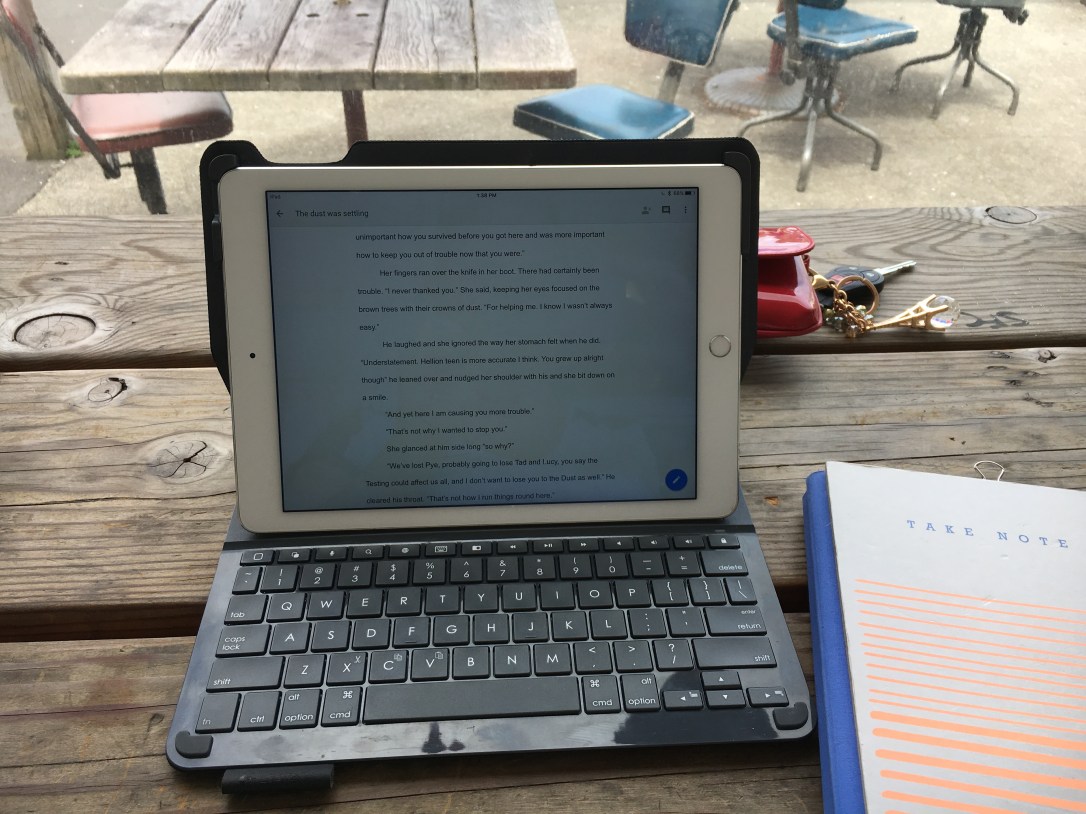
IMG_5845Revisions are tough. I mean, drafting is hard too, but you get to ignore the bad bits and the lumpy plot and the endlessly repeating ‘looked’, because everyone tells you to “Just get it out! words on a page! You can edit a bad page you can’t edit a blank one!”. You can’t escape this in revisions.
I’ve been carrying out a lot of revisions lately and am super happy to have completed the third draft of my Dust Bound fantasy novel. (SUCH a relief). When I first started the revision process I found it very overwhelming and difficult to get a handle on. I could do a couple of tweaks, sure, but I found really improving it a harder thing to figure out. I didn’t know where to start.

Sandcastle from Sand Shannon Hale Quote

This advice about sand to sandcastles is often given, and during my drafting stage it was really reassuring. But not for the revisions.  I had no idea how to get from vast quantities of sand, some pristine, some with bits of cat wee, some left best unmentioned, to glorious turrets of a mighty sandcastle.

Then I had an epiphany.

I didn’t have a vast sprawling sandpit with nothing on it. My manuscript wasn’t a virgin beach. There were lines, small heaps, markings in the sand. Foundations. Placeholders. These are the statements that are usually ‘tell’ statements. “They walked through the lush fields.” It’s a sentence that doesn’t do a lot. It’s a placeholder. It helps tell the writer the story so we can go back and flesh it out.

I realised this was my process.

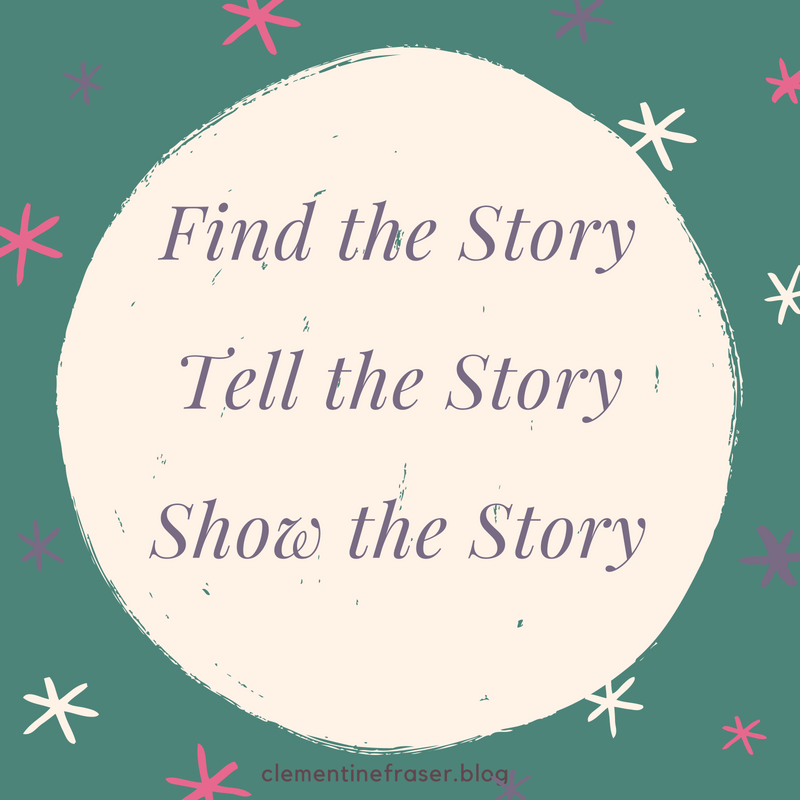
Find the StoryTell the StoryShow the Story

This made the whole thing far less overwhelming. I wasn’t starting from scratch. I wasn’t trying to get from finding to showing, or from sandpit to sandcastle. I was moving slowly in stages, each point moving me that bit further on.

The way to get from tell the story to show the story, for me, was to identify the placeholders and focus on developing them.

An example is probably best to demonstrate what I mean:

This is the first draft:

They noticed the quiet hum of the nomad camp the closer they got. It wasn’t silent, but it wasn’t just the dust that muffled the noise. It had the feel of people who knew exactly how loud they could be before they started drawing the attention of the boogieman in the dark.

Around a small fire, which was responsible for the glow, sat 15-20 people. A rigged cloth stretched high over the flames to catch the dust, allowing the fire to smoulder without being damped.  There were no old people and no children around the fire. That didn’t mean there were none. Covered carts ringed the clearing and it was through two of them that they walked, weapons down but out.

This is full of placeholders. Key signal words – ‘noticed’, ‘wasn’t’, ‘was’, ‘it had’, “there were”, “they walked”.

Focusing in on these words and statements, recognising that they provided a foundation for my sandcastle, enabled me to develop them into something more immersive:

The flickering light turned into the steady glow of a small fire. Thin trees opened to a clearing ringed by covered carts standing guard against the outside world. The quiet hum of people, all too aware of the threat of black tipped wings in the dark, grew louder with every step. Addie edged closer to Ryder, her sweaty palm slipping on her knife handle. Flames threw shifting shadows over the Dust, sending shivers crawling over her skin.

The carts loomed on either side of them as they walked a pathway into the centre, whispers trickling out from frayed canvas covers. A warm glow danced over the people gathered around the fire. Their eyes fixed on the newcomers. Rigged cloth stretched high over the flames to catch the Dust, allowing the fire to smoulder without suffocating under grey powder. No children played, no old people talked. The clearing filled with an expectant hush.

The biggest thing for me with my placeholder epiphany was a liberating acknowledgement that I didn’t have to have it right the first time. That it was a process. It helped me feel less overwhelmed and gave me a strategy for my revisions.

What are your best revising/editing tips? Share in the comments below!

On writing, Personal

Of drawings and ‘I can’ts’ and maybe I could haves.

I’ve been trawling through old writings I did when I was 14, inspired by a #WriteFightGifClub post on Twitter. I found some real doozies, but I also found some old sketches I made when I was convinced I would be an author someday.


Somewhere along the way I lost both the belief that I would be a writer, and the belief that I could draw.


I’ve reconnected with my writing soul, but my drawing soul is still very much under the debris of adult skepticism.


When you’re a child, you don’t question your ability to create. You just do it. I love watching kids draw and then be overtly and happily proud of the result. It broke my heart when my son stopped drawing because what was on the page didn’t match what was in his head because the same thing happened to me.


So these are to remind me that maybe, like the melodramatic and half baked pieces of writing that I unearthed and smiled over, these too are a part of my creative side that could be fostered and dusted off and maybe, just maybe, I can believe again.


old sketch commander
This was titled Commander Shereen. I can’t remember what story she was attached to.


Old sketch lying down

I was quite influenced by Larry Elmore’s drawings.


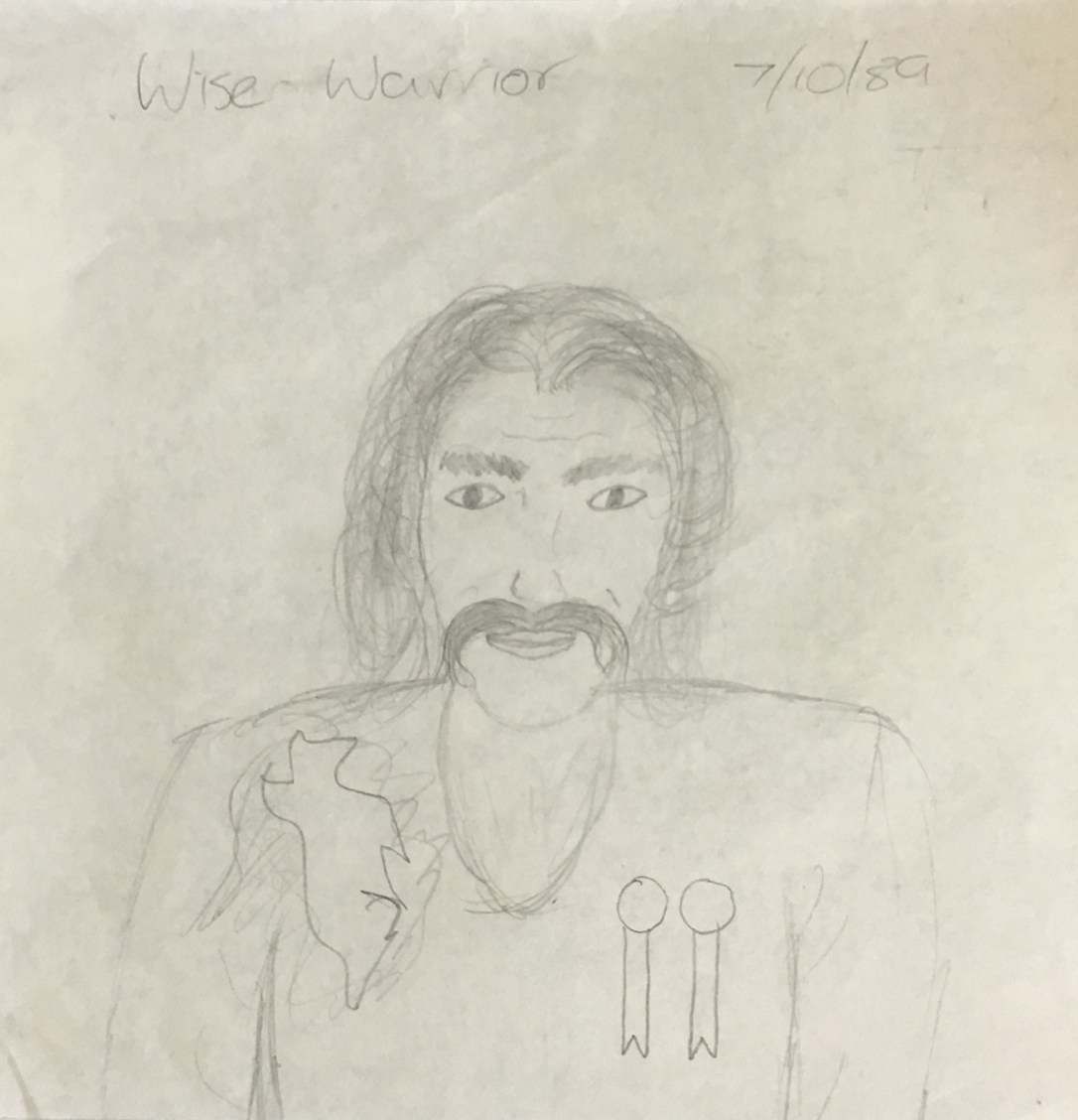
Old sketch wise warrior

This ‘wise warrior’ kind of looks like my dad.


old sketch portrait

I’ve never been great with portraits. They all look the same.


old sketch punk witch

This is a very 80s looking witch i believe.


old sketch princess

and my princess about to rescue herself.


I had fun looking at these old pictures and wondering about the girl I had been, who believed so strongly that she could write, and draw, and do well at both.


I think I’m going to try and recapture that.


How about you? what did you love doing when you were young that you just stopped doing?

inspiration, life, Personal

Unique or not? We share more than we don’t, and that’s pretty wonderful.

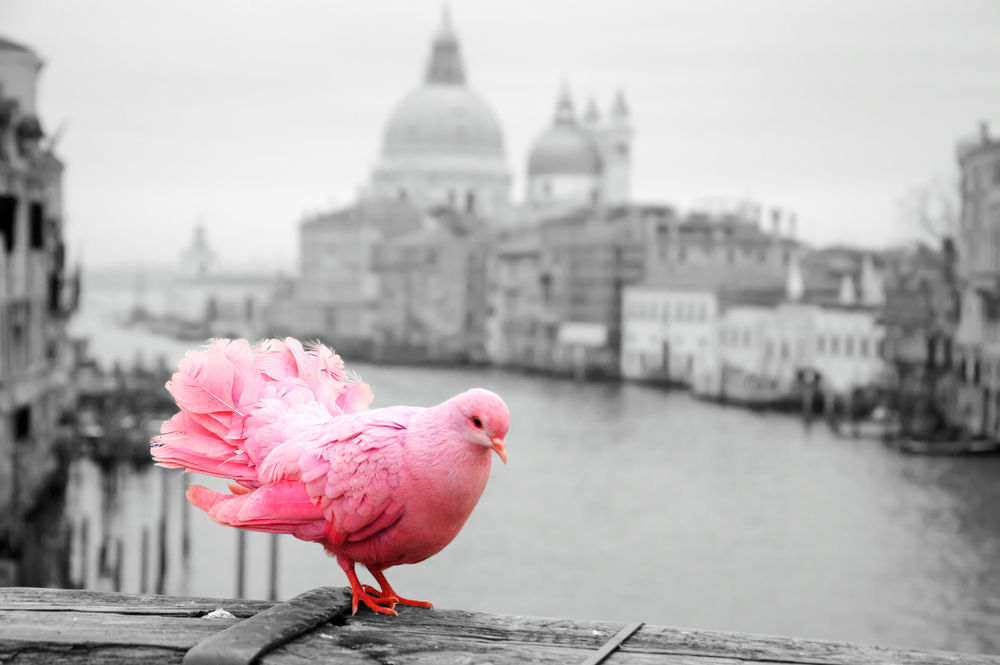
pink pigeon shutterstock_259257929

This week I was challenged by Tiffany Crystal to write a post on something I have encountered or experienced that I’m pretty sure no-one else would have.

I really struggled to think of something.

I’m not the only person to fall down Mt Ngauruhoe. I’m not the only person to have scars all over their face.

I’m not the only person to run off stage crying before her solo song (oh god, I hope I’m not the only one…)

I’m certainly not the only person to have a bad relationship and a broken marriage.

I’m not the only one to have to face illness of loved ones or the suicide of close friends.

I’m not the only one to get in the middle of two massive teenage boys fighting and get them to back down (“Back off. Pretty soon you’re going to hit me, and I really don’t think you want to hit me. You need to back away”)

I don’t even know if I and my flatmates are the only ones to face a possum coming down our chimney and the police coming to our rescue (Yes, that happened. Yes, it was as embarrassing as it sounds)

I don’t even think I’m the only one to ever face the embarrassment of going for a cheek kiss when the kaumatua is going for a hongi and ending up kissing him on the nose.

This made me think about how ‘unique’ my life has really been. Maybe all the important and defining and funny moments are just the same as everyone else’s.

But then, a student said to me the other day:

“Miss, when are you going to write your autobiography?”

“Oh, I don’t think I’m nearly interesting enough for an autobiography!”

“I think you are, Miss.”

This made me think about stories, and voice. There are lots and lots of different stories in the world, but really only a few that get told time and again in different ways. What makes a story truly unique is the person telling it – their voice. We hear often as writers – no-one can tell your story the way you can. It’s the same for life. No-one can live your life the way you can.

It’s like if I had a whole heap of pretty blocks and paper and glitter and pipe cleaners and glue and asked a group of people to each make something that represented them. They would start with the same materials, and what they built might be similar, but each would be different, depending on their vision and their skill.

That’s life.

It’s actually really reassuring knowing that we share more than we don’t. When things were very bad with my marriage and directly after we separated, and I was struggling to understand what had gone wrong, I found a website where many people had shared very similar experiences to mine. It was at once saddening that others had gone through the same thing but a huge relief to see my story played out again and again by strangers. We don’t feel so alone in our experience if we know others have felt it too.

together shutterstock_562885942

I am, however, possibly, the only one who has rung back a number to leave a message stating ‘Hi, it’s Clementine from the Auckland University History Department library here, just calling to let you know that Hitler and Germany invaded Warsaw on the 8th of September. Have a good day.’

So there’s that.

What about you? Have you encountered or experienced something you think it’s unlikely that others have? Let me know in the comments!

inspiration, life, self care

The masks we wear – how they help, and how they hinder.

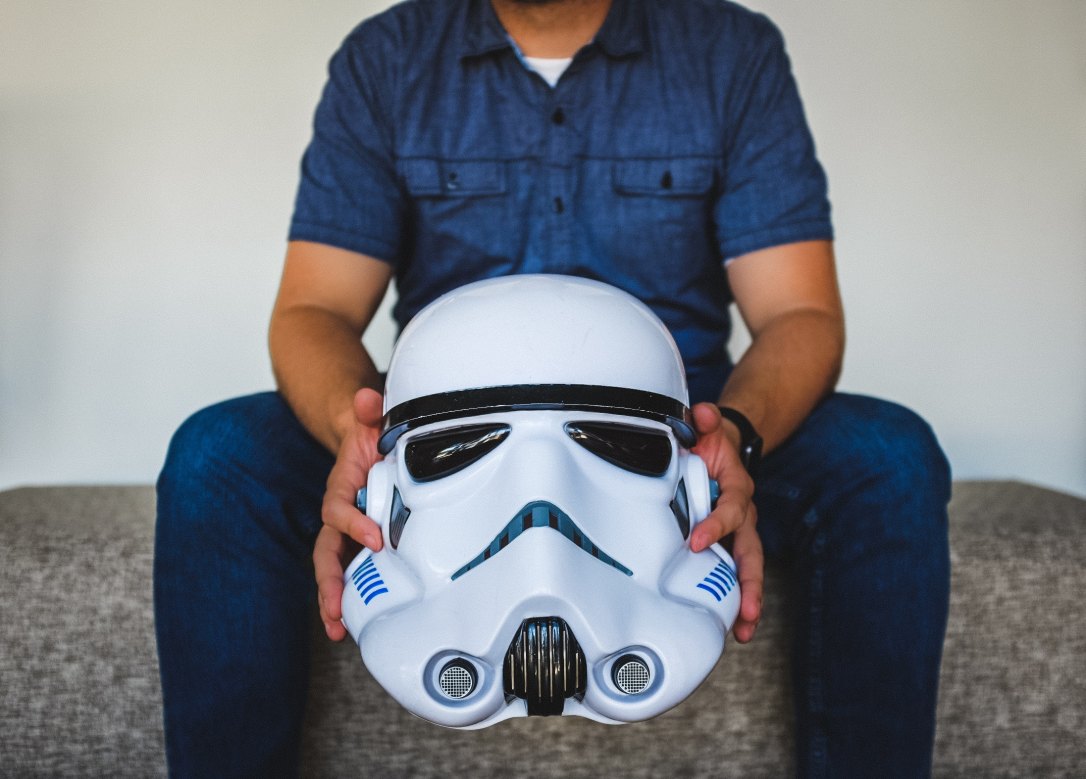
neonbrand-298927 man holding helmet

“Put your game face on”.


Often we don’t share our vulnerabilities or our inner selves with everyone. Some of us have different personas, different masks, for different situations and groups of people. Masks are pretty common, even when we think we’re an open person.


There are many reasons we wear masks. Probably the most common is for protection.


We wear a mask that hides who we really are to protect our authentic self from the hurt of rejection. It is vulnerability that we hide by avoiding the acknowledgement of what worries or frightens us. So, for instance, we maintain a facade of brightly smiling ‘I’m fine thanks’ when inside our loneliness or insecurities is a burden.


We wear a mask to try to keep up with the expectations of other people – filters on selfies, make up on before leaving the house, never asking for help or directions.


Some people wear different faces in different surroundings so that, for instance, work mates never see their raver side and their raver friends never see their serious academic side.


We take on roles as well, that are masks of a sort. These can be affirming but can also lead to imposter syndrome – everyone tells me I am good at something so I behave as if I am but.. what if i’m not??

identity question mark

When we wear a mask we can feel ‘safer’ but at what cost? Research shows that when people wear a physical mask that conceals their identity they are more likely to engage in behaviours that are anti-social and unlike themselves. I’m not saying that putting on your game face to protect yourself from rejection will lead to anti-social behaviour, but I do think it can be an obstacle to being that authentic self, and therefore an obstacle to making strong social connections.


I have written before about seeking to be as authentic in life as possible, so it won’t be a surprise that I am in favour of shedding masks to show people who we really are. I am a very open person and have, 9 times out of 10, never regretted showing people who I really am and how I really feel.


Masks that help us:


Firstly – sometimes we do need to conceal our emotions. It isn’t appropriate for me as a teacher to let my inner turmoil be apparent to my students. I’m very fortunate in that my workmates are friends, but in many workplaces too there is a level of professionalism that requires stoicism. This doesn’t mean that we don’t ask for help if we need it, more that a mask of stoicism helps us function in a professional setting despite significant emotional stress.


Secondly – fake it til you make it. Masks can be helpful in convincing us that we can actually do something.

“Dress for the job you want”

Research has shown that when children dress as batman they are more focused in class and attempt all tasks, therefore being more likely to achieve all tasks.


Those of you who have read my post on overcoming fear will remember that when i was 15 I fell down Mt Ngauruhoe, smashing open my face. This left me with a lingering fear of steep slippery slopes. When I returned to the mountain as a teacher, I knew I could not have a break down in front of my students. The mask of a competent and in control adult slipped over my face and I was able (with the help of another adult on the trip) to face my fear and walk across the saddle.


As with many things in life, it’s how we use our masks that determines whether they help or hinder us. The moment they restrict us from feeling able to access help, or from being who we really are, then we know we should probably drop them.
Dropping your mask can be scary, but it can also be liberating.

photo-booth-wedding-party-girls-160420.jpeg