Blog

inspiration, life

Dealing with Ch-ch-ch-changes

shutterstock_176490206 change direction

Lots of us don’t like change, even as we wish for it.


‘Taking a new step, uttering a new word, is what people fear most.’,

– Fyodor Dostoyevsky


One of my sons has always struggled a bit with change, whether it is a new swim teacher, a switch in daily routines, or going to a new school. I think it is often linked to a feeling of having no control – when plans change and you can’t do anything about it, it can be very unsettling.  No-one likes to feel out of control of the big things, and sometimes losing perceived control of the small things makes us think the big things are all changing too. Forced change is probably the hardest to deal with because we didn’t decide to do it. In this instance, the best way to cope with it is to focus on the positive things that can come from change. Find the silver linings.


Yesterday, a student emailed me to ask if she could change into my history class. It was a sweet and funny email and she said that she needed to change because my teaching was what had helped her to do well. It was very flattering, but what she’s really afraid of is that if she changes to a different teacher she might not do what she needs to do to pass well. This is unlikely to happen but this discussion happens every year with different students – and with different teachers. When we form a connection with someone and we attach our own achievements to them, we want to keep that going, not change to an unknown. The unknown is scary in its uncertainty. We worry that if we lose that tether to the person we think is responsible for our success we might not be successful. This is generally not the case. Certainly in this instance the student is capable of doing just as well (if not better) with a new teacher. There are some students I love but whom I think will actually thrive under someone else’s teaching. Change in this instance is positive – you get to see many different perspectives and styles of thinking.


Teaching is all about change. The curriculum changes, the course shifts, your classes sometimes change from what you were first timetabled, and the biggest change of all is that every year you get 120 new students to get to know, to help shape, and to motivate. Each student is unique and the way they respond to the content, and your teaching, is different from other students. The dynamic in a class also changes how you approach the material. This is why I never get bored even if I’m teaching the same content year after year.  I might get stressed, but never bored!  It has also taught me that despite the constant change, the basic system and structure and experience remains largely the same – safety and familiarity encircle a multitude of changes.


Change can be difficult to deal with if it feels like there are too many options, too many possible directions, and we don’t know which one to take. Like the train tracks above and the switching tracks – we worry we might make a change and hurtle down an unintended and unpleasant path. The thing to remember is that you can always change back. Sure, it might mean a bit of a detour, but the thing about detours is that you can still learn from them. You can enjoy the detour, hate it, wonder why on earth you followed the car in front as if it knew where it was going and it turns out you followed it home instead of to the detour route (ahem). But in the end, you can circle back to where you want to be and you might even have learned some stuff on the way.


Sometimes we fear change because we know it’s going to be hard. No-one really loves doing hard stuff, especially when things might already be tough. I say no-one but I’m sure there are some who do. I don’t understand those people. This is particularly the case when we are trying something new or making adjustments to our lifestyle.   The thing to remember is that change is vital for things to be different. If we want that difference, that improvement, we need to do the change. When you fear change it’s a good idea to surround yourself with some cheerleaders who help keep you accountable while you do the hard stuff, or some people who will give you guidance and help you through the hard bits. We don’t always have to do the changes by ourselves.
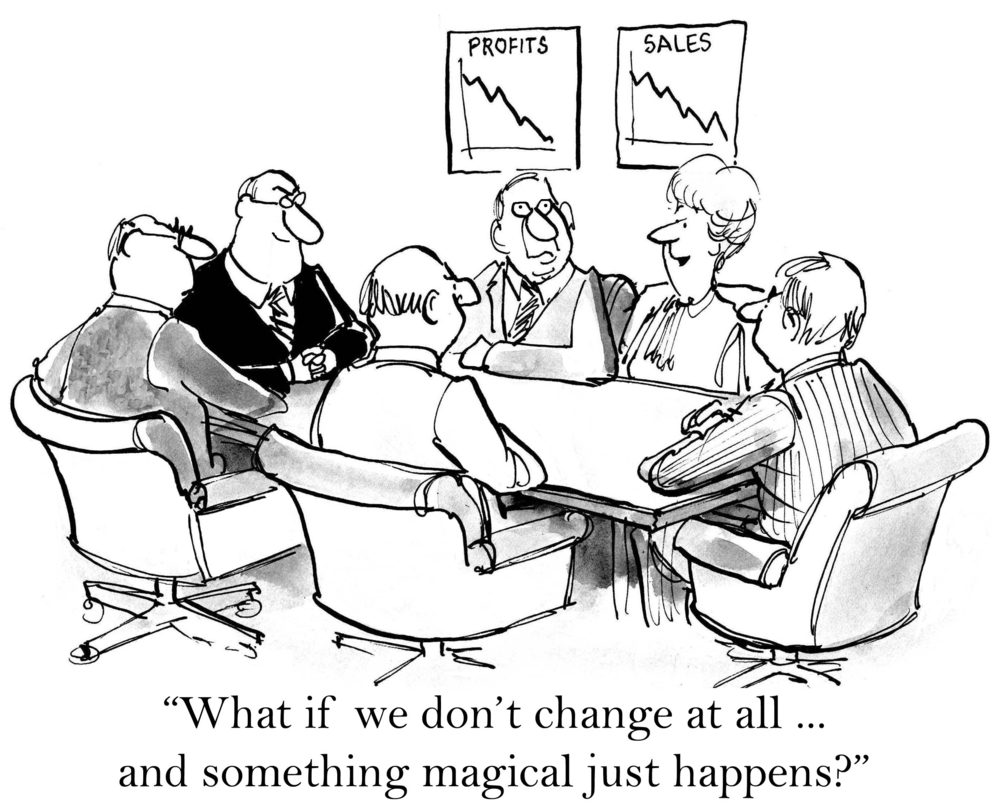
 

shutterstock_128236091 change cartoon


We also fear change because change might bring negative consequences, it might bring failure, it might bring ridicule. Usually it doesn’t. But even if it does – failure is an important part of learning, of getting to that improvement or difference that you want. Society is not big on failure but everybody fails, that’s how we get better.


It’s a bit cliche but cliches work because they’re true – butterflies are the ultimate example of change. I like them especially because they don’t just wake up one morning switched from caterpillar to floating fluttering fanciness. They go into a chrysalis and WORK on changing. It’s an extraordinary process. And, even better, this is not their first change. Caterpillars go through 4-5 stages of shedding their skins and becoming larger and physically different before they enter the chrysalis stage. So they demonstrate not just significant change, and beneficial change, but staged change.  They remind us that it’s okay to take small steps when we make changes, and small steps aren’t as scary as giant leaps across massive chasms. But one day, if we embrace change, learn from it, adapt, we might be able to fly.

boris-smokrovic-117239 change butterfly


inspiration, life

Don’t let your past have power over you – Lessons from the Lion King

shutterstock_573237151 Lion King

As a historian I’m pretty happy dwelling in the past. But, as a historian I also know that the narrative that you construct about the past determines the power that it has over you.


The Lion King is a good example of this. Simba runs away when his uncle convinces him he is responsible for his father’s death. He lives in the jungle with Timon and Pumba, eating grubs, learning to swim in pools, all very non-lion activities. While he is away, his uncle Scar takes over the Pridelands and destroys them. Years later, when Simba is grown, Rafiki the wise baboon confronts him about returning to the Pridelands. Continue reading “Don’t let your past have power over you – Lessons from the Lion King”

inspiration, life

Don’t squash yourself

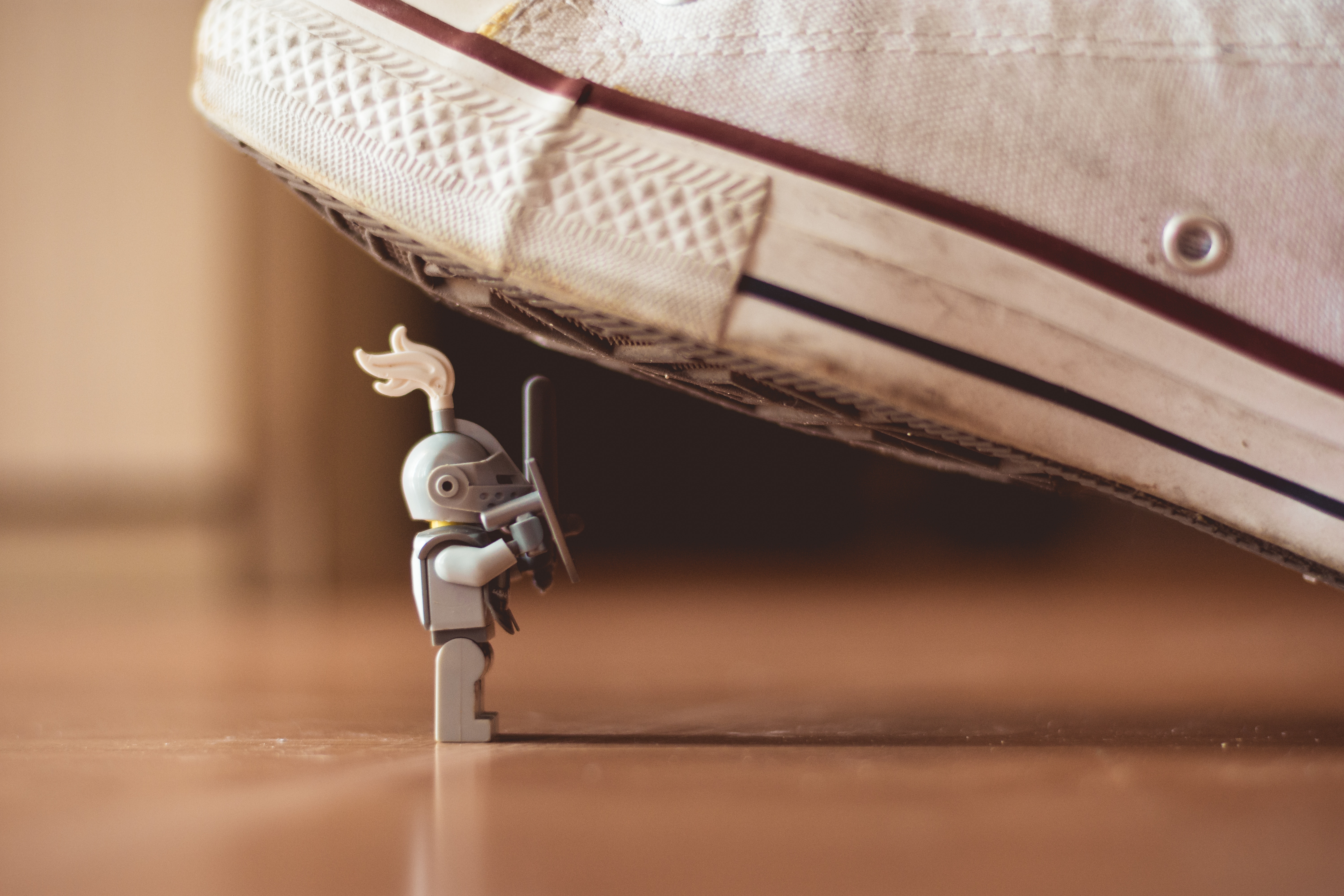
james-pond-191266 lego knight and shoe

I’ve been squashed before. And, even worse, I’ve squashed myself.

You know when you’re shining bright, holding forth, and then you catch yourself. Apologise for your enthusiasm. Or someone talks over you, puts you down, rolls their eyes at you. That’s squashing.

Giving up on your dreams, either because someone told you that they were ridiculous, or because you don’t believe that you could ever do it, be good enough. That’s squashing.

Changing the kind of person you are to be more acceptable to others, for whatever reason. That’s squashing.

When we’re children we dream big, we imagine big, we trust big. That is, if we’ve been fortunate enough to have been raised in a home that has nurtured those dreams, given us reason to trust, encouraged our flights of fancy. In the same way, when we as adults are around people who put us down, or drain us of energy, of emotion, we lose our dreams, our sparkle, ourselves.

Continue reading “Don’t squash yourself”
Musings on Fiction and Tropes

Faeries – Good Guys or Bad Guys?

“My mother said, I never should, play with the pixies in the wood”.*

Warnings are rife in Fairy Tales. At least, in the old ones. The ones with lots of blood in them.

Good and Bad are such concrete absolutes which, at the same time, are so hard to pin down. They depend on so many things. I was at a museum with my son once and we were in the WWII section. He turned to me and said “who were the goodies? were we the goodies?”.  I tried to give him an historian’s answer, full of complexity and grey areas. He was four. He didn’t quite follow. So I ended up by saying “Yes. Yes, we were the goodies.” as my historian soul cringed a little at the oversimplification.

Obviously we have the good, pretty, fairies who live in flowers, and the Fairy Godmothers, and they’re counteracted by the evil fairies like Maleficent in Sleeping Beauty. Nice, clean, cookie cutter stereotypes. But I’m more interested in how and why fairies can be seen as benevolent or malevolent, and how we’ve changed to see them in much more complicated ways.

The Disney movie Maleficent is one of my favourites. It tells the story of Sleeping Beauty from the point of view of the Evil Fairy who curses her. In this retelling, we understand what turned Maleficent so bitter. We see the trauma she went through and feel for her. We’re on her side. We see the tragedy of Aurora’s curse through the eyes of someone who regrets ever having cast it. In this story, Maleficent breaks out of the cookie cutter villain mould and becomes a real, authentic person. She is a complicated character who does evil things through pain but who, at heart, is good.  Once Upon a Time also has a story for their Maleficent which, while still keeping her as a villain, humanises her through creating empathy for her loss as a parent.  Who is good and who is bad gets a bit more grey.

Generally stories about fairies involve either humans being helped by them or hurt by them.

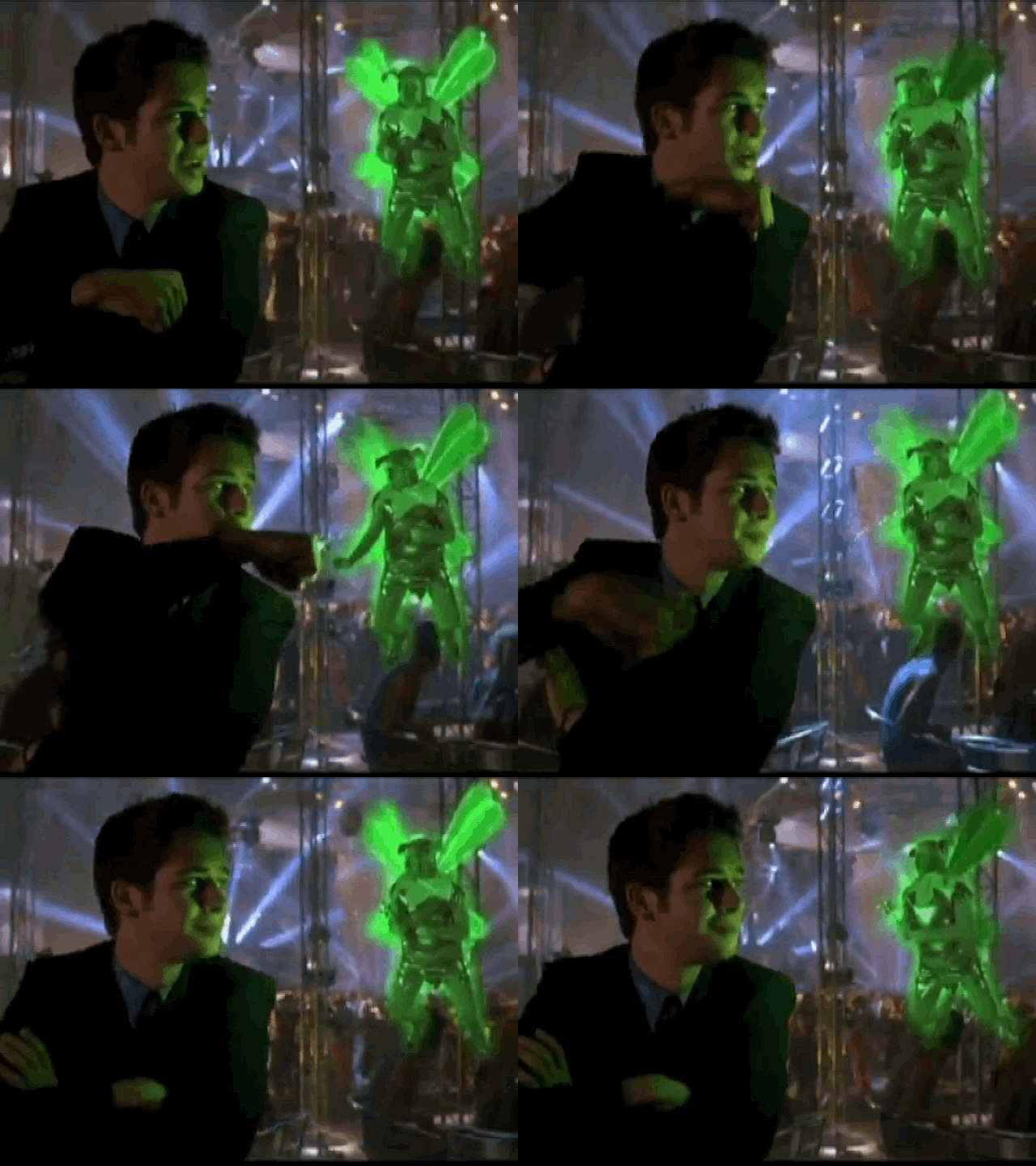
giphy (3)

But can we also take advantage of them?

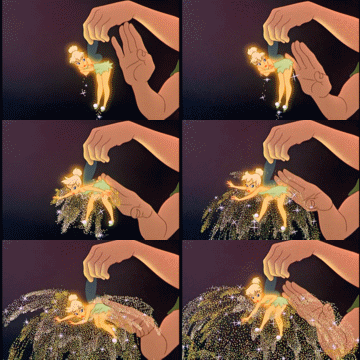
giphy (4)

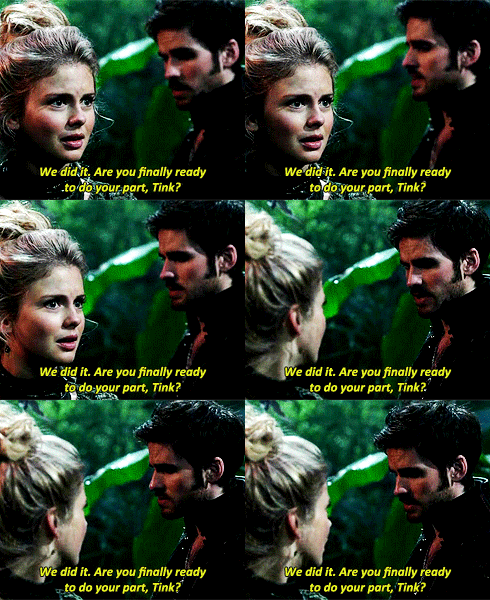
This gif, and how Peter Pan takes complete advantage of Tink but ignores her once Wendy comes along, made me think of Once Upon a Time and their take on Tinkerbell (played by Rose McIver who, incidentally, was a student at my school in my first year of teaching. I did the costumes for the school show she starred in – she was a great and courteous actress then and she still is now). {Caution – spoilers if you haven’t watched OUAT. And if you haven’t, you should!}

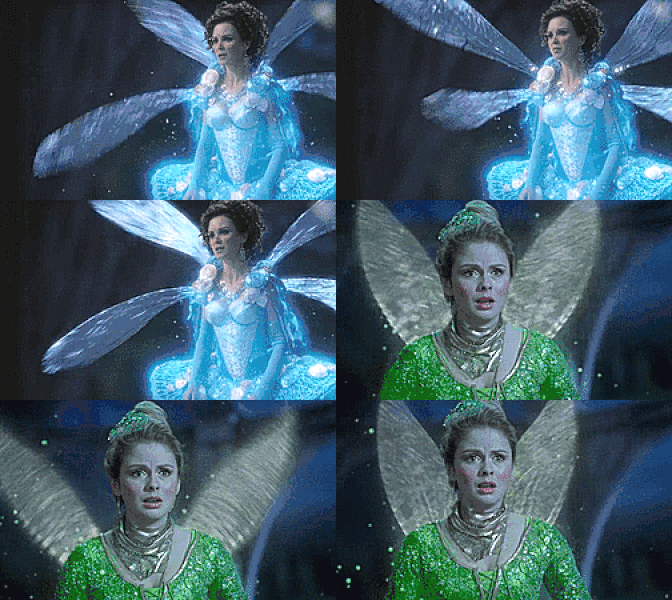
In OUAT, Tinkerbell was stripped of her wings by the Blue Fairy for breaking the rules in order to help the Evil Queen find true love.

giphy (8)

She then ended up in Neverland, run by the evil Peter Pan. We meet her here, disillusioned and cynical. Hook convinces her, despite her reluctance, to help them rescue Henry (a child) from Peter Pan

giphy (6)

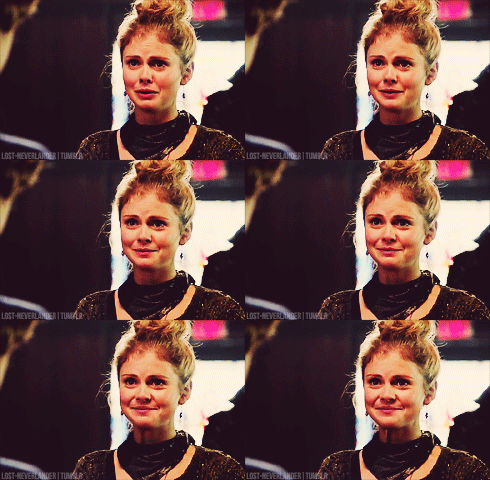
She returns with them to Storybrooke and then, through bravery and courage, is awarded back her wings.

giphy (7)

Of course, the kicker is that she always had the power to have her wings back, she just needed to BELIEVE in herself again.

The reason I bring this story up is that for me, Tinkerbell gets a really bad deal the whole time. Had she succeeded in her mission to find True Love for the Evil Queen, the whole curse might have been averted. I know that’s looking back with hindsight, but the Blue Fairy should never have stripped her of her wings. And letting her think that she could never get them back all the while she had the power to do it herself? Nasty. I like this telling of Tinkerbell because I think it shows both the good and bad side of fairies, and also how a ‘good’ fairy (old Blue) behaves in a way that is actually fairly typical of a ‘bad’ fairy – punishing people who go against her will.

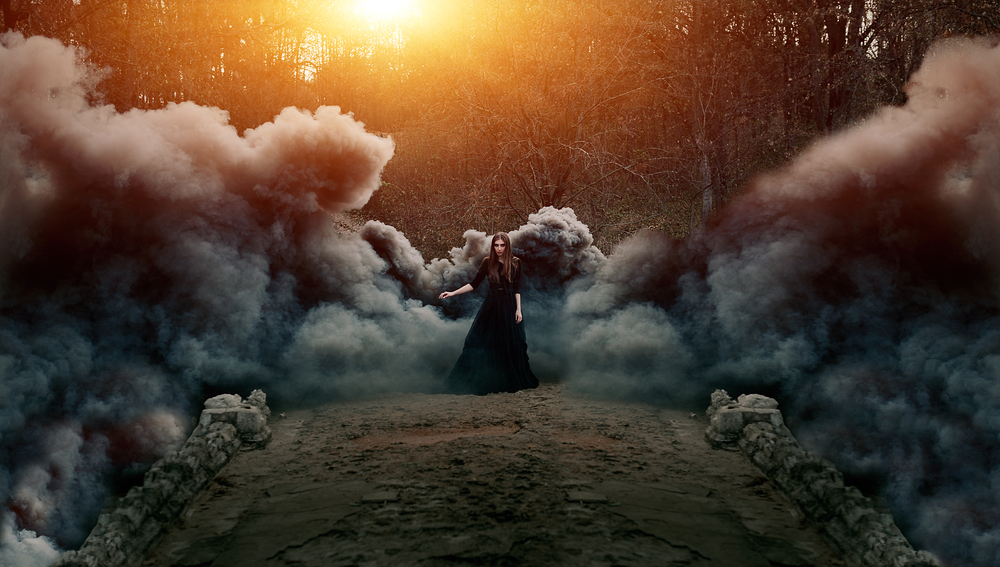
Fairies are powerful. They are transformative. That opens them up to the potential for great good or great evil. But I think the scariest fairies are the ones who are indifferent to humans. We are so below them that they don’t think twice about stealing our children, leaving changelings in their place.  Enchanting humans and keeping them in their fairy hills for hundreds of years is not an act of malice, necessarily, but rather like a human might keep a wild animal as a pet.

This kind of Fairy, or Faery, is how they are depicted in Patricia Briggs’ Mercy Thompson novels. Supremely powerful beings who are tricksy, cruel, but not necessarily evil. The first time I read this I was so enraptured because it changed the whole way I viewed the Fae. It seems to tap into the older, darker stories but with a more modern, urban edge. This was probably the biggest influence on how I portray them in my own writing.

I think that also taps into something deeper in the human psyche – for so much of history the vast majority of people have been under the power of a few. The rich and noble and royal who had absolute power, life and death. We see it in the rise of autocrats and dictators in the 20th Century. And today. Even with the rise of modern democracy in the Nineteenth Century, we still have little actual control over the decisions that shape our world. Faeries reflect that supreme power – they can be benevolent, dishing out rewards and wishes and hope, or they can be indifferent, doing what is in their best interests with little care for the desires of those who are beneath them, or they can be actively malevolent, seeking to control and destroy and to harm.  Perhaps that is why they are so prevalent in our stories, and why we now seek to understand them.

evil fairy andclouds

* A note – although I grew up with the word ‘pixies’, the original is apparently Gypsies. Which makes it a very different and more problematic kind of song.

life, Personal

Serendipity and a Very Happy Art Tale

IMG_7343

There are times when life seems to just go your way. When chance magically eventuates to bring you a wonderful outcome. This is the story of one of those times.


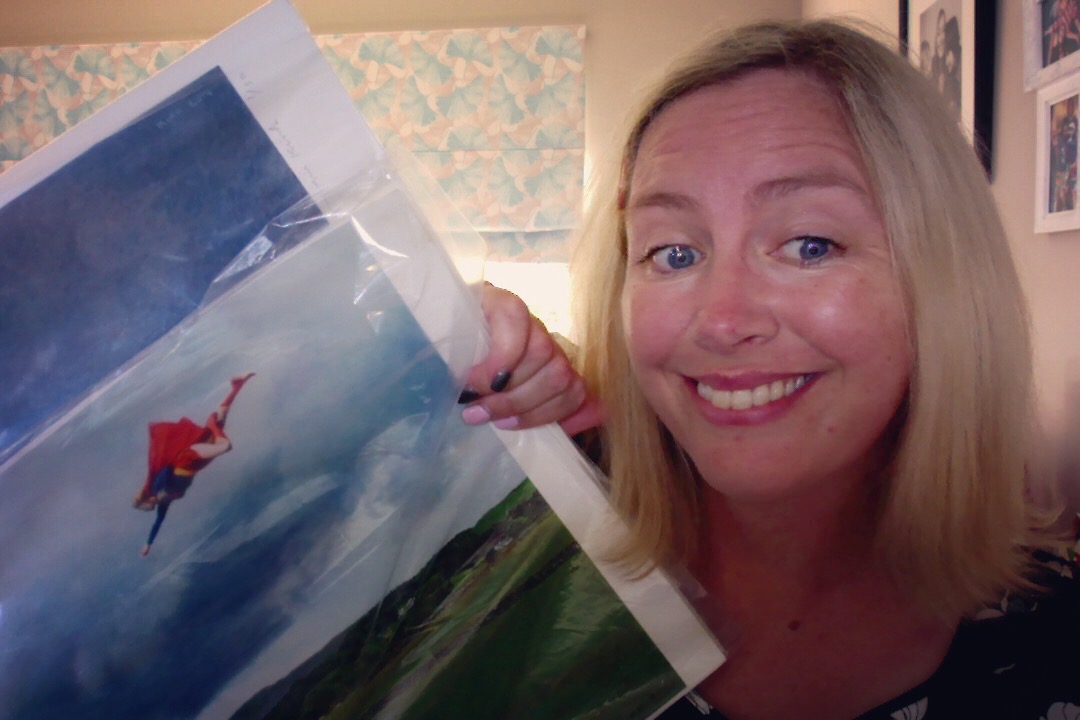
I love art. I don’t have a lot, other than my grandmother’s paintings, because I can’t really afford it and I don’t always see things I like. I was talking with my friend Kellie on Twitter about buying a piece of art she’d seen out at lunch, and I told her something along the lines of  ‘You NEED to buy it if you can, because if you really love it you will always remember it and always be sad it isn’t with you.”  *spoiler – she’d already got the painting by the time I commented. That’s not the serendipitous bit*.


The reason I was so vehement about this is because I remember so vividly two pieces of art in particular that I loved and didn’t buy. Continue reading “Serendipity and a Very Happy Art Tale”