Friday Feeling, happiness, inspiration

Friday Morning Positivity Boost

Pollyanna 2

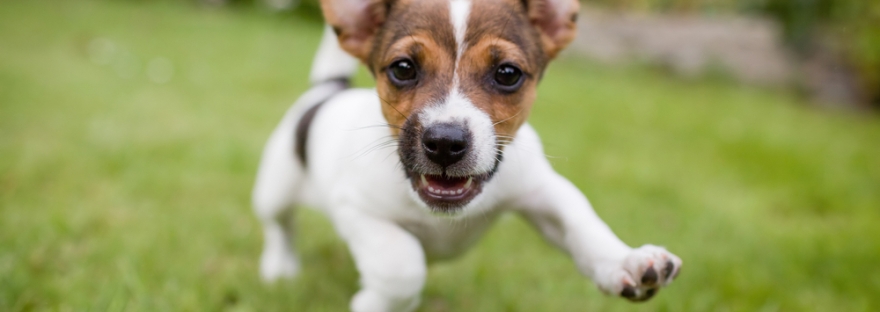
Dropping in on your Friday morning like a puppy with some love and some wise words. (Puppies don’t talk but if they could I think they’d have heaps to teach us).


Sometimes you have the tough days. You don’t even know why your mood suddenly drops – thinking back over your day it was okay. Well. They did give you a mocha, not a flat white and had to remake it when you were already late. Oh! and you were rushing to work and traffic was everywhere you wanted to be. Ah, and you realised your bank balance was a lot lower than it should be. Rain. Okay. Those are all reasons. BUT the actual day was okay. In fact, some bits were nice.


I had that day yesterday.


This morning I reflected on my day yesterday and realised – sure, there were some tough bits but on the whole I had a really nice day. I was really mostly just super exhausted.  I put myself to bed last night like a tired toddler screaming because it was all just too hard.


Sleep helps.


When we’re having the tough days there are two ways to deal with it. One is to just try and ride it out. Realise that there doesn’t even have to be a reason for the low mood – sometimes you have a bad mood and it just is. (or you need sleep. sleep is important). The other is to consciously step back and think about all the good things that happened, even if they were small.


A student was super happy to see me and say hello.


Someone brought me a coffee back from their lunchbreak.


I managed to squeeze some writing in during the day.


I got lots of super affectionate snuggles from my boys.


My friends are lovely and entertaining people who make my day so much nicer.  They also had my back when I was running late.


Perhaps if I’d been able to consciously step back and think about these things yesterday, the bad mood might not have taken such hold. So that’s my goal for today – focus on the things that make me happy. Relish those moments.


And if that doesn’t work, I just have to remember something very important.


IT IS FRIDAY!

giphy feels like friday


That’s right! It might not be Friday yet in most of the world but for us lucky Kiwis it is. And trust me, we’ll be sliding into that Friday day like we own it.


giphy happy dance 3


So if you have a bit of a rocky start today, just remember – you’re not alone, it’s Friday, and Friday is for happy.


Have a fantastic day.


giphy happy dance 1


happiness, inspiration, life, Personal

Silly Play All Day – How silliness helps you adult

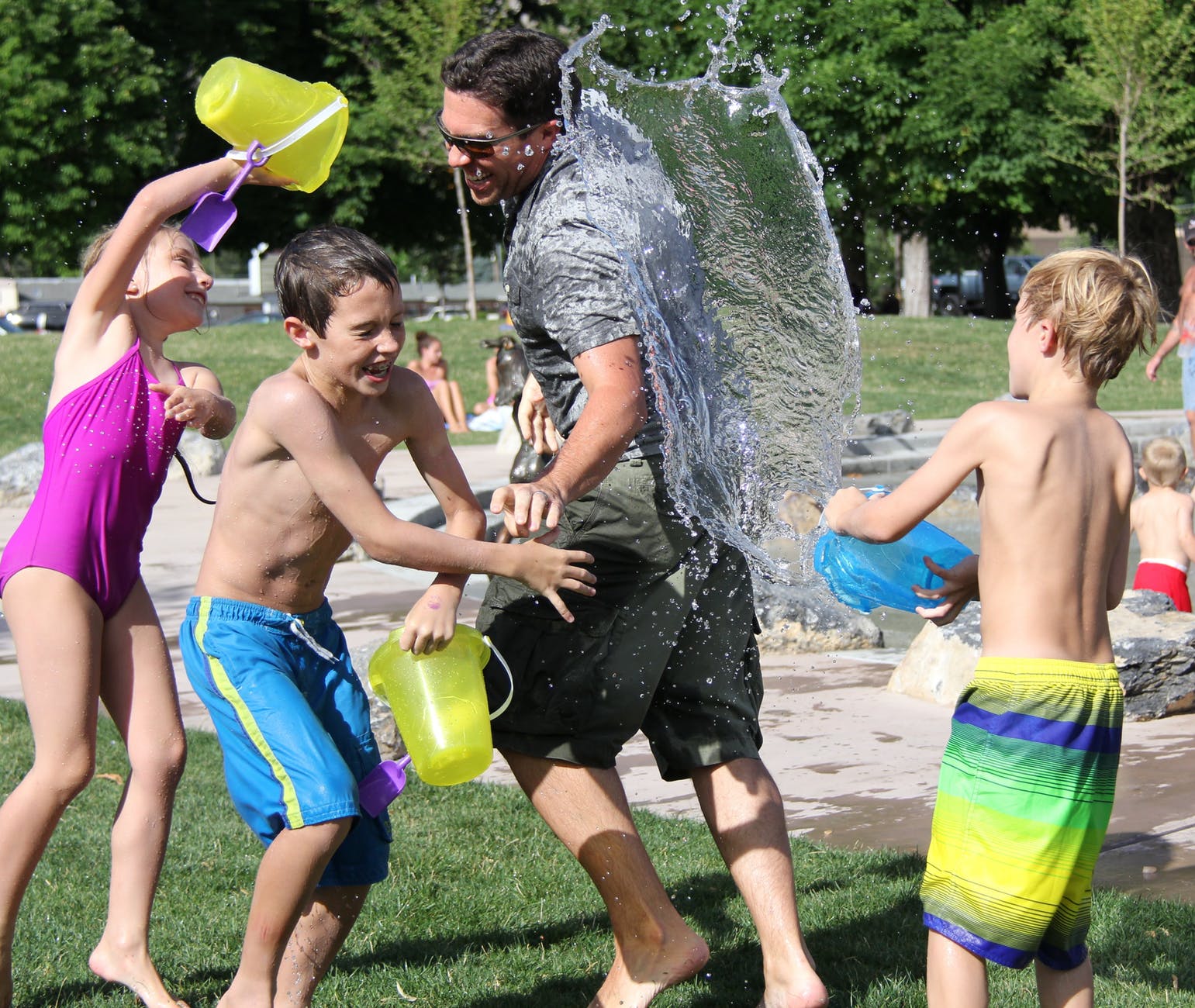
water-fight-children-water-play-51349.jpeg

Do you remember how old you were when you stopped playing? Chances are it was about 13 or 14, the cusp of teenagerhood when you sometimes played with the little kids and mostly started hanging out with the adults or in your room. Playgrounds became places to hang out, rather than run around and play. Any play had to be done ‘ironically’, or online in video games. Kids come into High School and wonder where the adventure playgrounds are and six months later they are ‘hanging out’ with the best of them.

This is no bad thing. It’s a part of figuring out your growing identity.

What I think is a shame is how silly play is then often frowned on after a certain age.  “Act your age”. “Don’t be ridiculous”.  Every so often at school the boys (sometimes girls) start playing tag, or manhunt, or some other version of chase. Mostly this isn’t a problem (we have a big school) but when it’s the huge 17 and 18 year old guys crashing around wildly laughing and not noticing the little 12 year olds trampled underfoot then the silly police (us) have to step in.

“Aw Miss! we’re just having fun!”

“Sorry kids, not here. Take it out to the field.”

This is an age where we learn about appropriate times and places for fun. It’s a good lesson. But it is also a shame in some ways.


The playing adult steps sideways into another reality

– Erik H. Erikson


Play is really important. We know this and protect it in our children’s learning times in a way that many other historical eras didn’t, and in ways that places with less privilege can’t do to the same extent. Play does lots of good moral stuff like teaching you how to share, how to take turns, but imaginative play in particular can also teach you empathy. It can give you a chance to become someone else for a while and to explore different parts of your identity.

My youngest son likes to play on the computer a lot at the moment. I think it is something to do with the suddenly big age gap between him and the oldest, who is entering that teenagedom I spoke of before. I’ve noticed that when he gets really into whatever roblox game he’s playing (usually something to do with cars or a shop) he starts whispering to himself. I recognise this. I did it with dolls, or outside in the garden on my own. Even though the game is not a role playing game, he is creating his own world as he plays. This is the power of play for kids, but also for adults.

There are adult based play activities available – such as the escape room, paintball, laser tag. But play doesn’t have to be based around those things. Play can simply be being silly.

And silly is important.

We have a staff fun day out every year where we do fun activities – things like mini golf, beach cricket, caileigh dancing, and on one memorable occasion we did zorb soccer. I get claustrophobic and hated not being able to see people behind me knocking me down, but being part of a group and running around and (KEY THING) being ridiculously SILLY made me incredibly happy. You bounce off other people’s happiness (in this instance quite literally) and it forms stronger connections and boosts your own morale.

Silly helps.

One of the things I love most about my colleagues is their level of silly. I best say here that silly doesn’t interfere with professionalism, it doesn’t affect at all the way you do your job. In fact, if anything, I’d argue it makes you more able to do your job well.  Nerf gun battles. Ambushes. Kazoo duck quacking. Making posters of each other and ‘decorating’ desks. Singing. Dumb jokes. All this silliness creates an atmosphere where happiness happens and people feel positive about where they are. We become friends, not just workmates. Laughter releases stress. Students come in to hand in work and then say later ‘Your department always seems so happy. I like going in there.”

What matters to me is not that this helps people to be better workers (which I believe it does) but that it helps us to be happier people, it lifts our wellbeing.

When you’re a parent, or are around kids, and they want to play with you, sometimes it’s just not the right time, or you’re tired, or you just want to have time to yourself. But when you play, when you really play and unleash your silly, magic can happen. My sons recruited me to play in their nerf war. I wasn’t that keen but said yeah okay. Then a little tendril of silly came out. I became a double agent and ‘stabbed’ one boy in the back then stole his gun. The expression on my kids’ faces when they realised that mum was playing along with them was worth all the missed feet up coffee in hand time in the world. Being around kids does give you an excuse to be silly. You can start singing a screechy song and do silly actions and you’ve got an excuse. You can change every fourth word in a story book to ‘fart’ at bedtime reading and you’ve got an excuse (yes I did this, yes their reactions were everything you would most desire, and yes it went on waaay too long). The point is, when we can do that silly for ourselves and let other people be silly even if they are ‘grown up’ I reckon we can be happier.

playful shutterstock_490199146

There’s a group of writers on Twitter with whom I have long hilarious gif filled conversations. They are the epitome of silly. They’re also incredibly supportive and generous with knowledge and very talented people, but the reason people keep being drawn into their vortex is the silly. You can play act and take on roles and voices and it’s like a big improv or kids playground romp. It made me realise how important that silly is to me and how much it helps me with everything else in my life.

Adulting is hard. It is full of bills, cats who don’t like the cheap catfood, rushing, oh my goodness always rushing to school to work to home to appointments to gym to socialising.  It is full of chores. It is not full of sleep. It is not always full of fun. I know no-one said life had to be all about having fun but man, when you think about it – if we get 90 odd years to be on this planet and only in 12 of them do we get to be silly and have fun whenever, well that seems like a big waste to me.

Silly helps the adulting go down.  It’s a lot easier to cope with all the grown up demands if you get to have time to play as well, whatever form that play takes.

So this week, think about what you want to do to introduce some playtime into your life and let your silly out!

playful shutterstock_328122575


inspiration, life

Dealing with Ch-ch-ch-changes

shutterstock_176490206 change direction

Lots of us don’t like change, even as we wish for it.


‘Taking a new step, uttering a new word, is what people fear most.’,

– Fyodor Dostoyevsky


One of my sons has always struggled a bit with change, whether it is a new swim teacher, a switch in daily routines, or going to a new school. I think it is often linked to a feeling of having no control – when plans change and you can’t do anything about it, it can be very unsettling.  No-one likes to feel out of control of the big things, and sometimes losing perceived control of the small things makes us think the big things are all changing too. Forced change is probably the hardest to deal with because we didn’t decide to do it. In this instance, the best way to cope with it is to focus on the positive things that can come from change. Find the silver linings.


Yesterday, a student emailed me to ask if she could change into my history class. It was a sweet and funny email and she said that she needed to change because my teaching was what had helped her to do well. It was very flattering, but what she’s really afraid of is that if she changes to a different teacher she might not do what she needs to do to pass well. This is unlikely to happen but this discussion happens every year with different students – and with different teachers. When we form a connection with someone and we attach our own achievements to them, we want to keep that going, not change to an unknown. The unknown is scary in its uncertainty. We worry that if we lose that tether to the person we think is responsible for our success we might not be successful. This is generally not the case. Certainly in this instance the student is capable of doing just as well (if not better) with a new teacher. There are some students I love but whom I think will actually thrive under someone else’s teaching. Change in this instance is positive – you get to see many different perspectives and styles of thinking.


Teaching is all about change. The curriculum changes, the course shifts, your classes sometimes change from what you were first timetabled, and the biggest change of all is that every year you get 120 new students to get to know, to help shape, and to motivate. Each student is unique and the way they respond to the content, and your teaching, is different from other students. The dynamic in a class also changes how you approach the material. This is why I never get bored even if I’m teaching the same content year after year.  I might get stressed, but never bored!  It has also taught me that despite the constant change, the basic system and structure and experience remains largely the same – safety and familiarity encircle a multitude of changes.


Change can be difficult to deal with if it feels like there are too many options, too many possible directions, and we don’t know which one to take. Like the train tracks above and the switching tracks – we worry we might make a change and hurtle down an unintended and unpleasant path. The thing to remember is that you can always change back. Sure, it might mean a bit of a detour, but the thing about detours is that you can still learn from them. You can enjoy the detour, hate it, wonder why on earth you followed the car in front as if it knew where it was going and it turns out you followed it home instead of to the detour route (ahem). But in the end, you can circle back to where you want to be and you might even have learned some stuff on the way.


Sometimes we fear change because we know it’s going to be hard. No-one really loves doing hard stuff, especially when things might already be tough. I say no-one but I’m sure there are some who do. I don’t understand those people. This is particularly the case when we are trying something new or making adjustments to our lifestyle.   The thing to remember is that change is vital for things to be different. If we want that difference, that improvement, we need to do the change. When you fear change it’s a good idea to surround yourself with some cheerleaders who help keep you accountable while you do the hard stuff, or some people who will give you guidance and help you through the hard bits. We don’t always have to do the changes by ourselves.


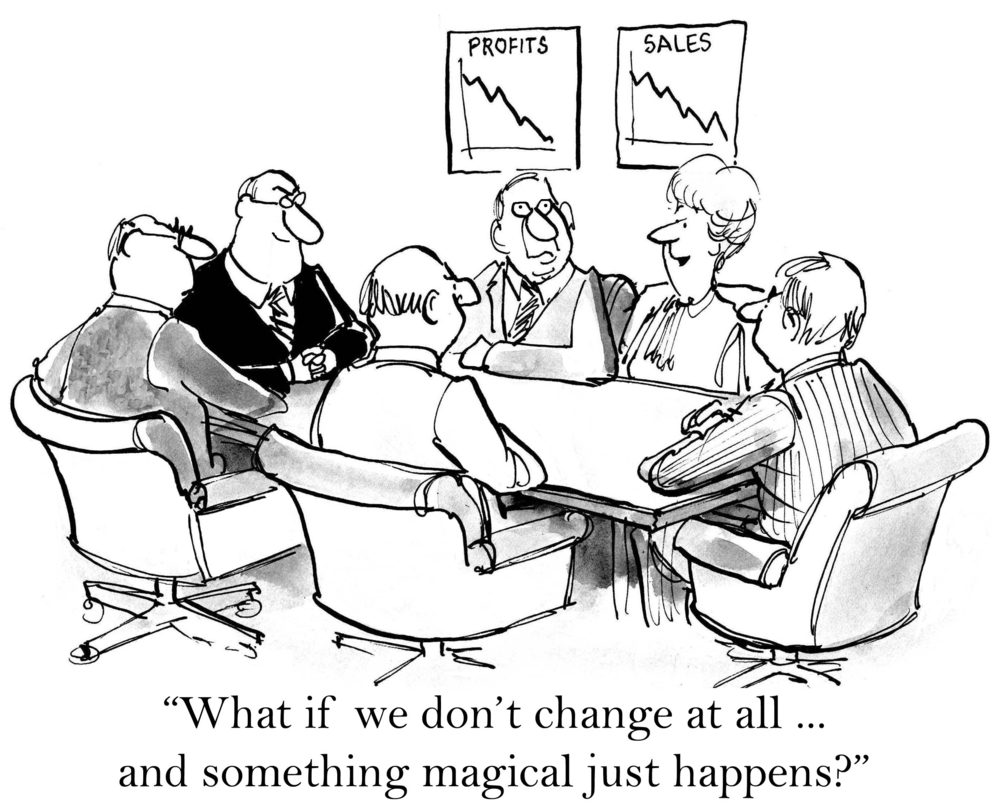
shutterstock_128236091 change cartoon


We also fear change because change might bring negative consequences, it might bring failure, it might bring ridicule. Usually it doesn’t. But even if it does – failure is an important part of learning, of getting to that improvement or difference that you want. Society is not big on failure but everybody fails, that’s how we get better.


It’s a bit cliche but cliches work because they’re true – butterflies are the ultimate example of change. I like them especially because they don’t just wake up one morning switched from caterpillar to floating fluttering fanciness. They go into a chrysalis and WORK on changing. It’s an extraordinary process. And, even better, this is not their first change. Caterpillars go through 4-5 stages of shedding their skins and becoming larger and physically different before they enter the chrysalis stage. So they demonstrate not just significant change, and beneficial change, but staged change.  They remind us that it’s okay to take small steps when we make changes, and small steps aren’t as scary as giant leaps across massive chasms. But one day, if we embrace change, learn from it, adapt, we might be able to fly.

boris-smokrovic-117239 change butterfly


inspiration, life

Don’t let your past have power over you – Lessons from the Lion King

shutterstock_573237151 Lion King

As a historian I’m pretty happy dwelling in the past. But, as a historian I also know that the narrative that you construct about the past determines the power that it has over you.


The Lion King is a good example of this. Simba runs away when his uncle convinces him he is responsible for his father’s death. He lives in the jungle with Timon and Pumba, eating grubs, learning to swim in pools, all very non-lion activities. While he is away, his uncle Scar takes over the Pridelands and destroys them. Years later, when Simba is grown, Rafiki the wise baboon confronts him about returning to the Pridelands. Continue reading “Don’t let your past have power over you – Lessons from the Lion King”

inspiration, life

Don’t squash yourself

james-pond-191266 lego knight and shoe

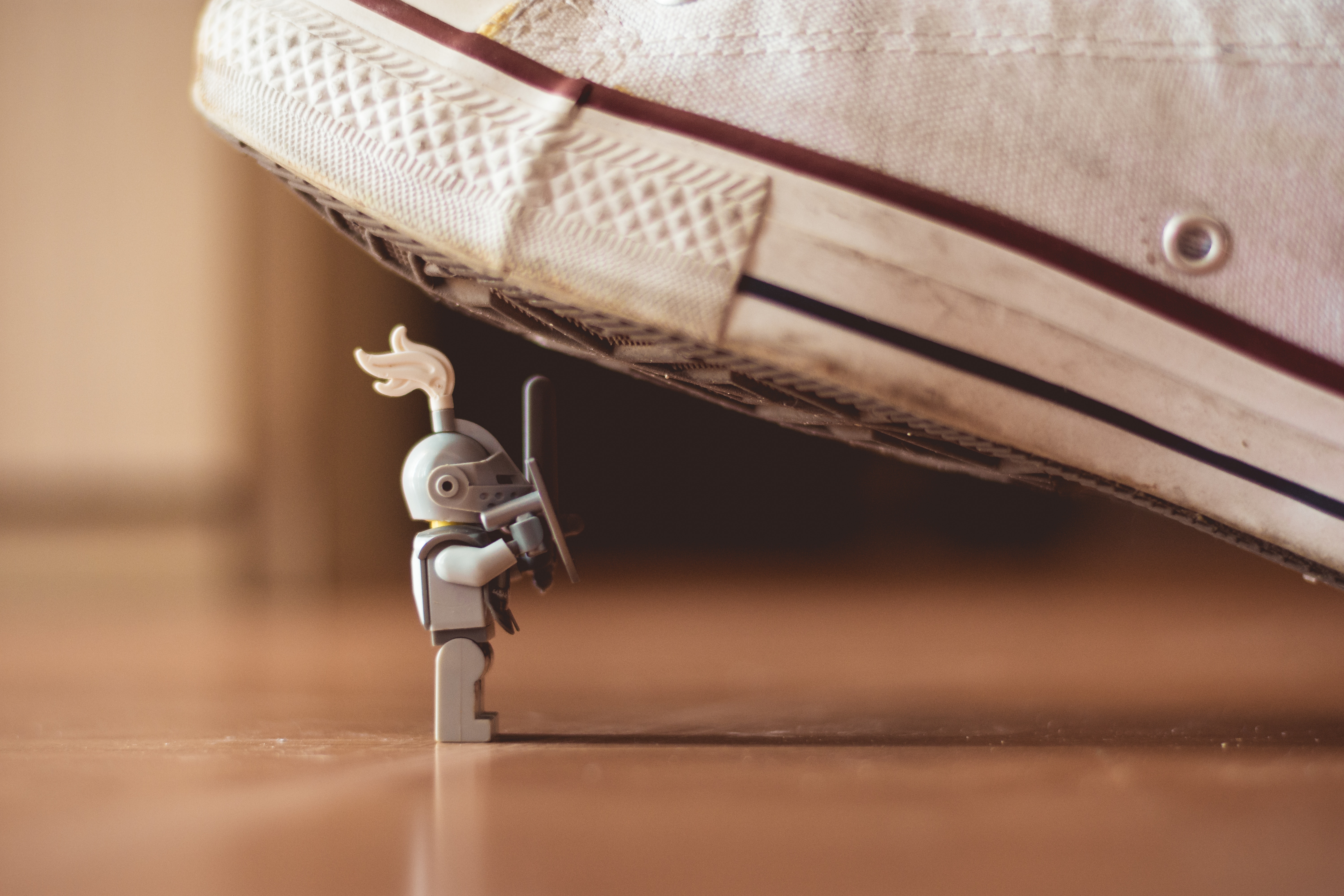
I’ve been squashed before. And, even worse, I’ve squashed myself.

You know when you’re shining bright, holding forth, and then you catch yourself. Apologise for your enthusiasm. Or someone talks over you, puts you down, rolls their eyes at you. That’s squashing.

Giving up on your dreams, either because someone told you that they were ridiculous, or because you don’t believe that you could ever do it, be good enough. That’s squashing.

Changing the kind of person you are to be more acceptable to others, for whatever reason. That’s squashing.

When we’re children we dream big, we imagine big, we trust big. That is, if we’ve been fortunate enough to have been raised in a home that has nurtured those dreams, given us reason to trust, encouraged our flights of fancy. In the same way, when we as adults are around people who put us down, or drain us of energy, of emotion, we lose our dreams, our sparkle, ourselves.

Continue reading “Don’t squash yourself”